For warehouse managers, logistics supervisors, and small business owners, choosing between a pallet stacker and a forklift goes beyond equipment selection—it’s about aligning the machine’s capabilities with your daily tasks, workspace constraints, and long-term cost goals. A mismatched tool can lead to slowed workflows, unnecessary maintenance expenses, and even workplace accidents. Equally important is managing risks after purchase, from operational mistakes to unplanned downtime. At SECSUN, we understand these challenges, and we’ve built a support framework to help you operate with confidence. Below is a clear breakdown of how to choose the right machine, mitigate post-purchase risks, and the guarantees SECUN provides.
1. How to Match Pallet Stackers & Forklifts to Your Working Scenarios
No single material handling machine fits all needs—your choice should depend on your workspace, load requirements, and task type. Here’s how to align each machine with common scenarios:
1.1 Indoor Narrow Spaces & Light-Duty Tasks
If your operations take place in tight indoor areas (e.g., small warehouses, retail backrooms, or grocery storage) with aisle widths of 2–2.5 meters, a pallet stacker is the ideal choice. Key Fit: Pallet stackers have a compact design (turning radius ≤1.5 meters) that navigates narrow aisles easily. They’re built for light loads (1–2 tons) and moderate lifting heights (3–6 meters)—perfect for stacking pallets of electronics, food, or retail goods
1.2 Outdoor/Heavy-Duty Operations
For large open spaces (e.g., construction yards, industrial factories, or outdoor shipping docks) and heavy loads (2–10 tons), a forklift is the better option. Key Fit: Forklifts handle bulky, heavy materials (e.g., steel beams, construction bricks, or full cargo pallets) . Diesel or LPG-powered models (for outdoor use) tackle rough terrain (gravel, uneven concrete), while electric variants work for large indoor factories.
SECUN Advantage: Our forklifts feature reinforced frames and wear-resistant rock buckets, plus high-torque engines that maintain power even under heavy loads—reducing task time by 20% compared to lighter machines.
1.3 Small Budgets & Light Workloads
If you’re a small business (e.g., local shops, startups, or small distribution centers) with limited funds and daily tasks that require 1–3 hours of material handling, a pallet stacker offers unmatched cost efficiency. Key Fit: Pallet stackers have lower upfront costs compared to forklifts and minimal maintenance needs (no engine oil changes, just battery care). They’re easy to operate—novice staff can master controls in 1–2 hours, cutting training costs.
2. Post-Purchase Risk Mitigation Tips for Operators
Even the right machine needs proper care to avoid downtime and accidents. Focus on these three core practices:
2.1 Daily Checks & Operational Safety
For Pallet Stackers: Inspect battery charge levels (use SECSUN’s digital display for real-time alerts), check hydraulic hoses for leaks, and clear debris from wheels. Avoid overloading—our stackers include a built-in load indicator that sounds an alarm if you exceed the 1–2 ton limit. For Forklifts: Verify engine oil/coolant levels (for diesel models) or battery charge (for electric variants), inspect fork tines for wear, and test brakes. Never lift loads while driving—SECUN’s forklifts have a speed limiter to prevent tipping.
2.2 Periodic Maintenance
Pallet Stackers: Lubricate lift chains monthly, clean battery terminals weekly to prevent corrosion, and replace worn tires every 6–12 months. SECUN provides a free maintenance checklist with every stacker to simplify scheduling.
Forklifts: For electric models, charge batteries fully (8–10 hours) to extend lifespan; for diesel models, change oil every 500 hours and inspect hydraulic systems every 250 hours.
Conclusion: Choose Confidently with SECUN
Whether you need a compact pallet stacker for narrow indoor spaces or a tough forklift for heavy outdoor work, the key is matching the machine to your unique needs. With SECUN’s expert guidance, durable equipment, and ongoing support, you can cut costs, boost efficiency, and keep operations safe.
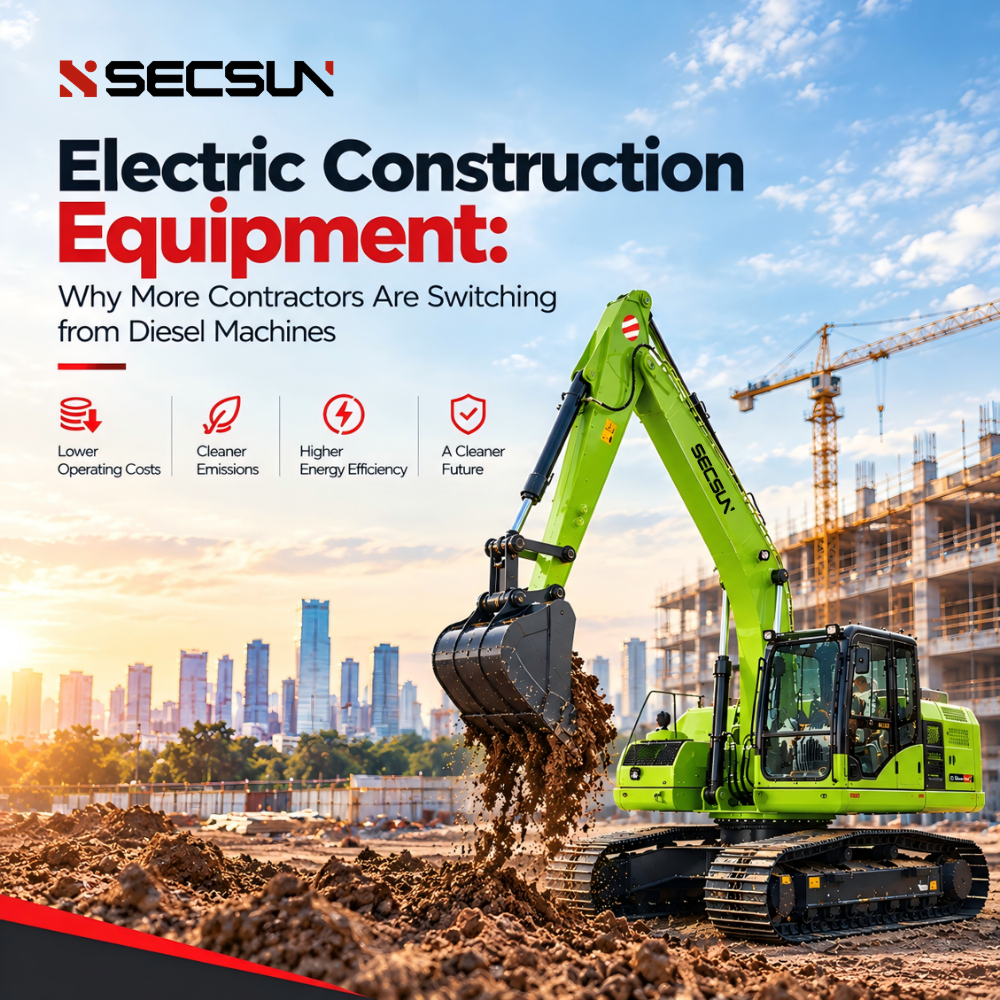 Electric Construction Equipment: Why More Contractors Are Switching from Diesel Machines
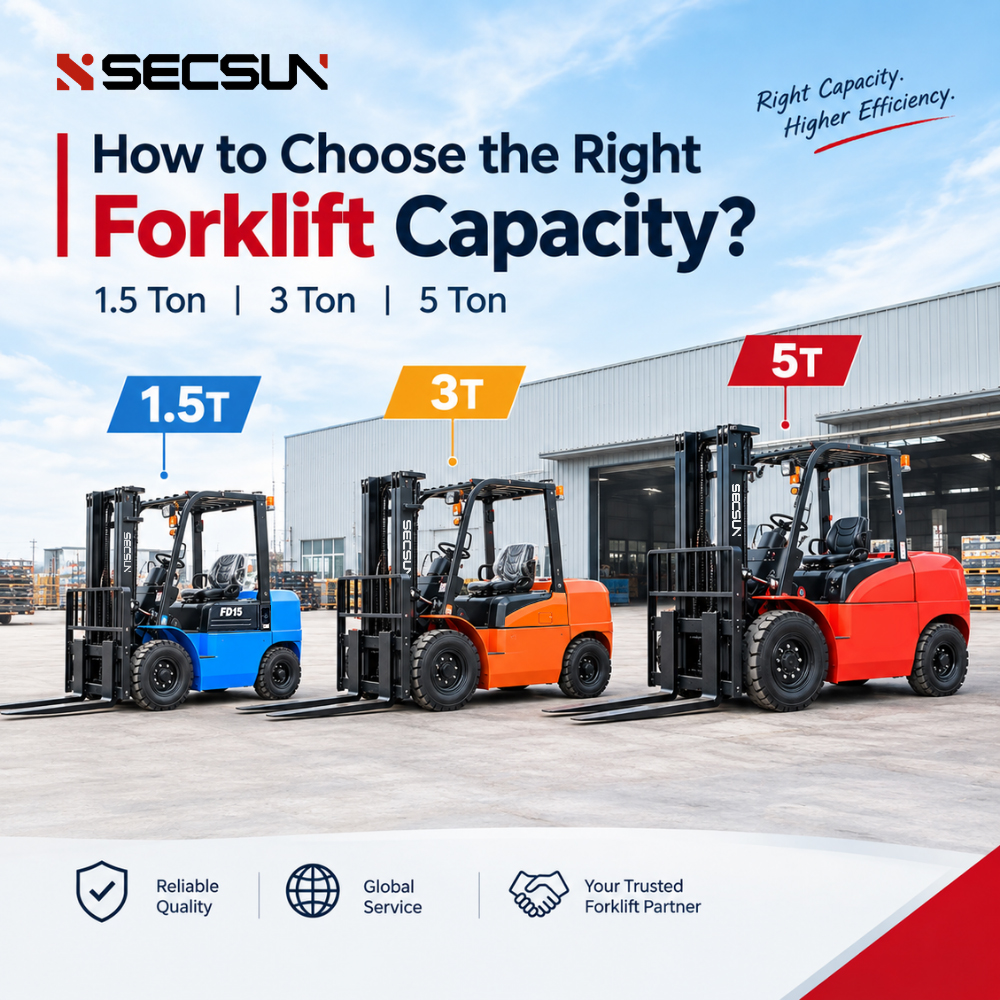 How to Choose the Right Forklift Capacity: 1.5 Ton, 3 Ton, or 5 Ton?
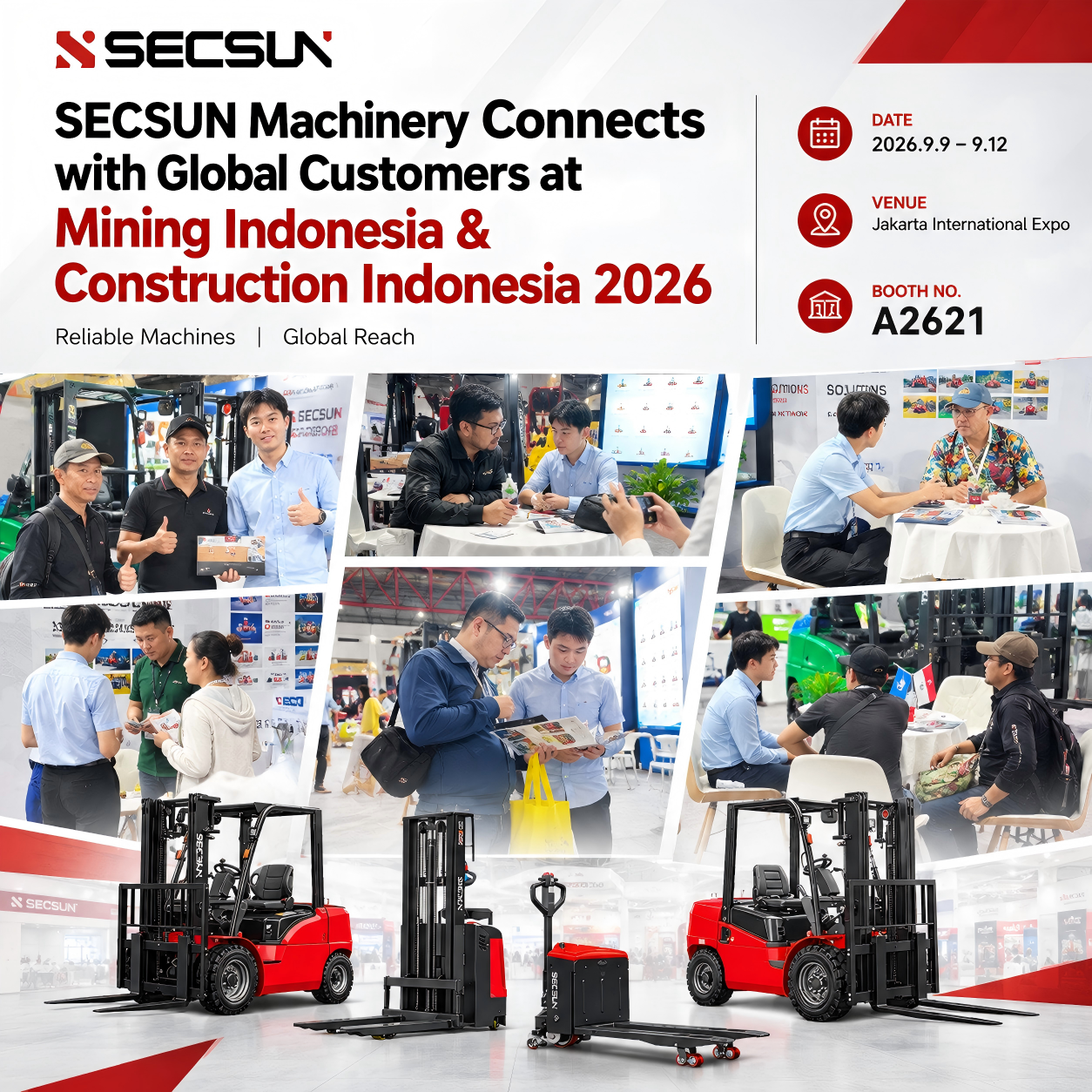 SECSUN Machinery Connects with Global Customers at Mining Indonesia & Construction Indonesia 2026
 SECSUN Machinery Featured at CIFIT 2026 in Xiamen, China