Revealing the Irreplaceable Advantages of LPG Power in High-Intensity Operations
At the heart of today’s global supply chain efficiency—the modern high-intensity logistics center—equipment selection directly determines throughput and operating costs. Despite the growing trend toward electrification, an interesting phenomenon persists: in many benchmark logistics hubs that require continuous, multi-shift operation, 3 ton LPG (liquefied petroleum gas) forklifts remain the dominant choice. This is not a sign of outdated technology, but a rational decision rooted in reliability, total cost of ownership, and operational flexibility.
I. Uninterrupted Power: Eliminating "Charging Anxiety" and Ensuring Production Rhythm
In high-intensity logistics centers, time is money, and any unplanned downtime translates to significant losses. Here lies the core advantage of LPG forklifts:
Instant Refueling: Unlike electric forklifts, which require hours to recharge (even fast charging involves cooling time and occupies charging space), LPG forklifts can be refueled in minutes—simply swap the gas cylinder, much like changing a lighter cartridge. This fits perfectly into short breaks or shift changes, ensuring immediate readiness for the next round of operation.
Consistent Power Output: LPG engines deliver stable, sustained rated power without the performance decline—such as reduced travel or lifting speeds—that electric forklifts experience as battery charge depletes. This is critical for picking, loading, and unloading tasks that require peak efficiency throughout an entire shift.
Foundation for Multi-Shift Operations: In round-the-clock, three-shift operations where "machines don’t rest," LPG forklifts can run almost without interruption. With planned cylinder replacement, there’s no need for complex battery rotation, charging cycles, or backup battery inventory—simplifying fleet management and freeing up valuable warehouse space.
II. Adaptability to Diverse Environments: From -30°C Cold Storage to 50°C Outdoor Yards
Logistics centers often span a range of environments, from temperature-controlled and cold storage warehouses to hot outdoor yards in summer. LPG forklifts demonstrate outstanding environmental adaptability:
Superior Performance in Low Temperatures: In cold and freezer storage environments (0°C to -30°C), LPG engines start more reliably than diesel (which can gel) and maintain full power output. In contrast, lithium batteries in electric forklifts experience severe range loss, reduced charging efficiency, and potential cell damage under high-current discharge in the cold, making LPG the reliable choice for cold-chain logistics.
Tolerance to High Temperatures and Ventilation Needs:Compared to diesel forklifts, which emit harmful exhaust in enclosed spaces, LPG burns cleaner with minimal particulates and nitrogen oxides. This allows safe use in well-ventilated semi-indoor or indoor areas such as loading docks and transfer zones, meeting both regulatory and occupational health requirements.
III. Economical Total Cost of Ownership: Balancing Acquisition, Operation, and Maintenance
From a return-on-investment perspective, 3 ton LPG forklifts offer competitive total cost of ownership:
Acquisition Cost: Generally lower than equivalent electric models, especially those equipped with high-capacity lithium batteries, reducing the initial investment threshold.
Fuel Cost: While LPG prices per unit may be slightly higher than diesel, its high thermal efficiency and lower engine wear keep overall fuel costs comparable and more predictable. Unlike fluctuating electricity rates, LPG prices tend to be more stable.
Maintenance Cost: LPG engines are relatively simple, burn cleanly with less carbon buildup, and require less complex after treatment systems, leading to lower routine maintenance costs and failure rates compared to diesel engines of similar intensity. Additionally, they avoid the high battery replacement costs typical of electric forklifts (often exceeding one-third of the vehicle’s price).
Resale Value and Flexibility: A mature used market and well-established fuel supply chain contribute to high ownership rates and stable residual value for LPG forklifts. Cylinder leasing models also eliminate risks and upfront infrastructure costs associated with fuel storage.
IV. Continuous Evolution: Bio-LPG and Smart Fleet Management
LPG technology continues to advance. With the adoption of bio-LPG—a fuel derived from renewable organic waste—carbon emissions from LPG forklifts can be reduced by up to 80%, even achieving carbon neutrality and adding a new green dimension. Furthermore, by integrating devices, fuel consumption, operational status, and cylinder levels can be precisely monitored and intelligently scheduled, further optimizing fleet efficiency.
Conclusion
In the high-intensity logistics center—a battlefield extremely sensitive to efficiency, reliability, and cost—the 3 ton LPG forklift has proven it is not a transitional product, but a specialized, optimal tool for specific high-intensity, continuous operation scenarios. With its "refuel like reloading" operational continuity, excellent all-environment adaptability, and demonstrated cost-effectiveness, it represents a practical engineering choice: on the path toward zero emissions, it offers a reliable power solution that solves today’s problems while evolving sustainably into the future.
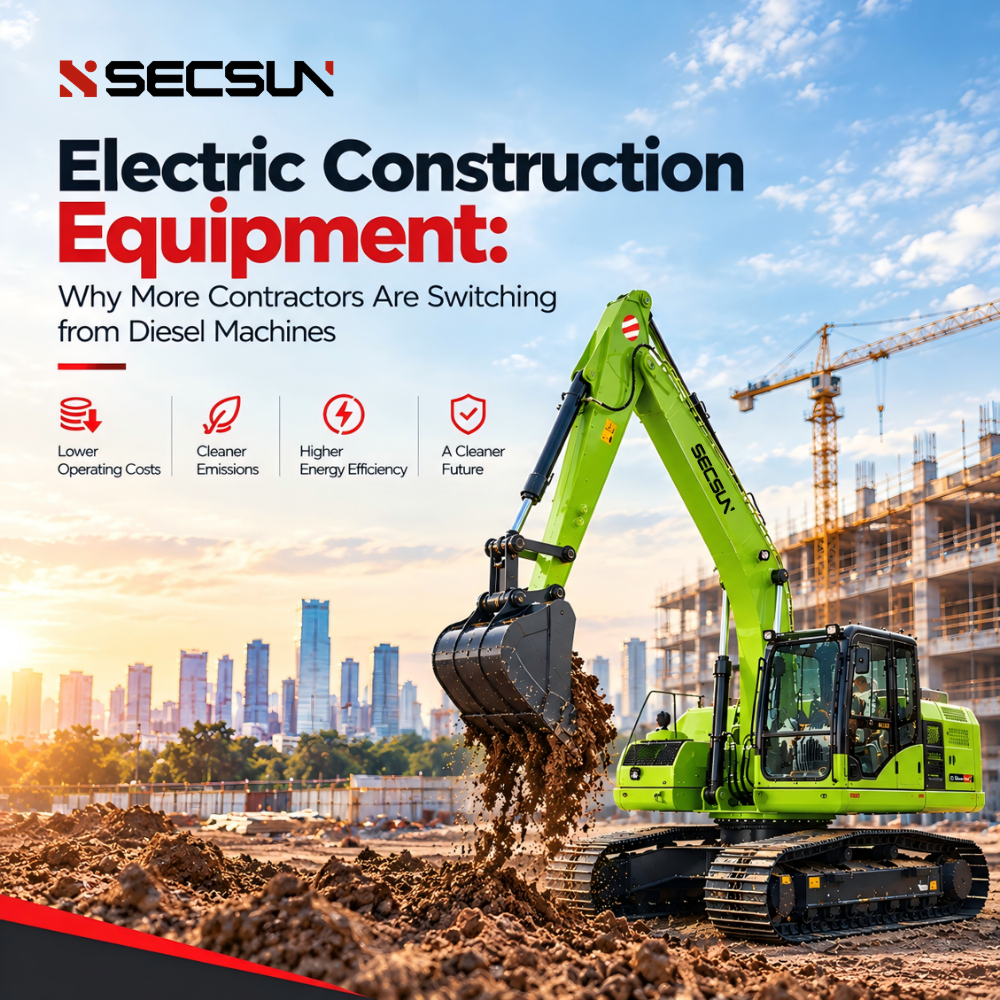 Electric Construction Equipment: Why More Contractors Are Switching from Diesel Machines
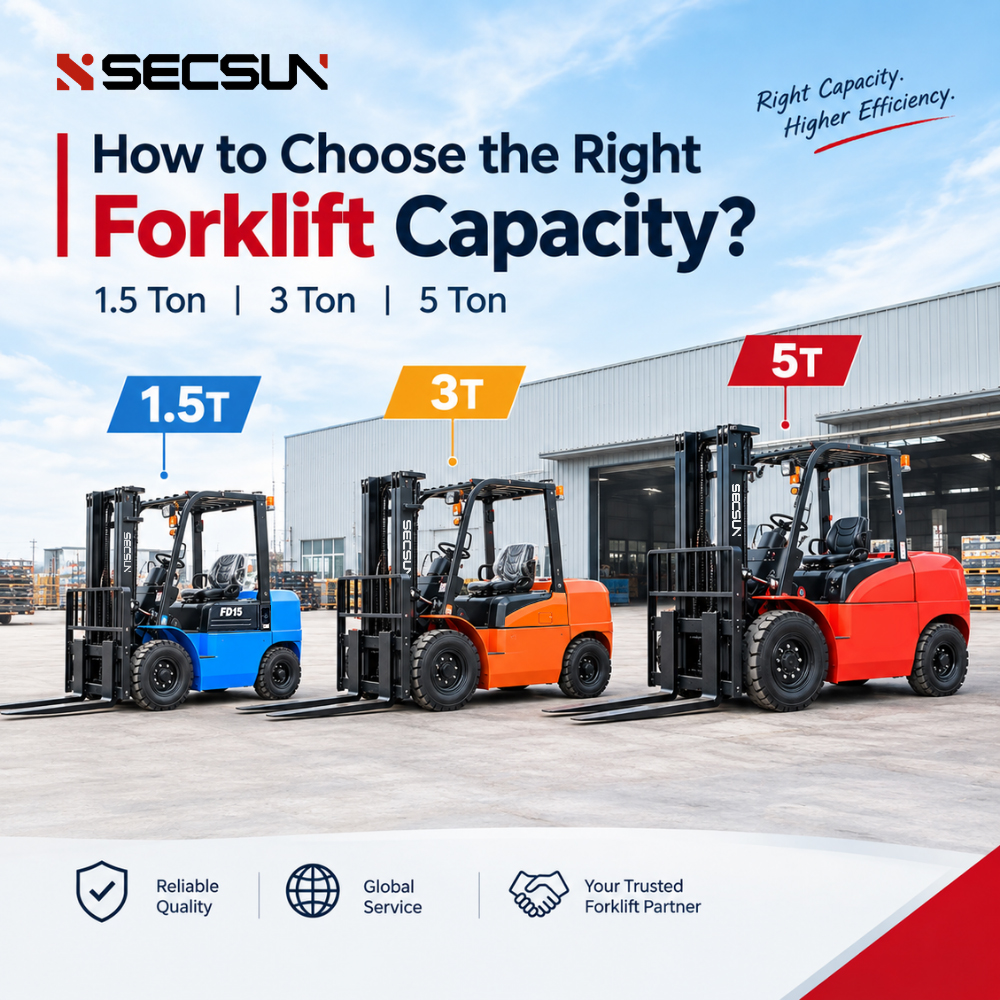 How to Choose the Right Forklift Capacity: 1.5 Ton, 3 Ton, or 5 Ton?
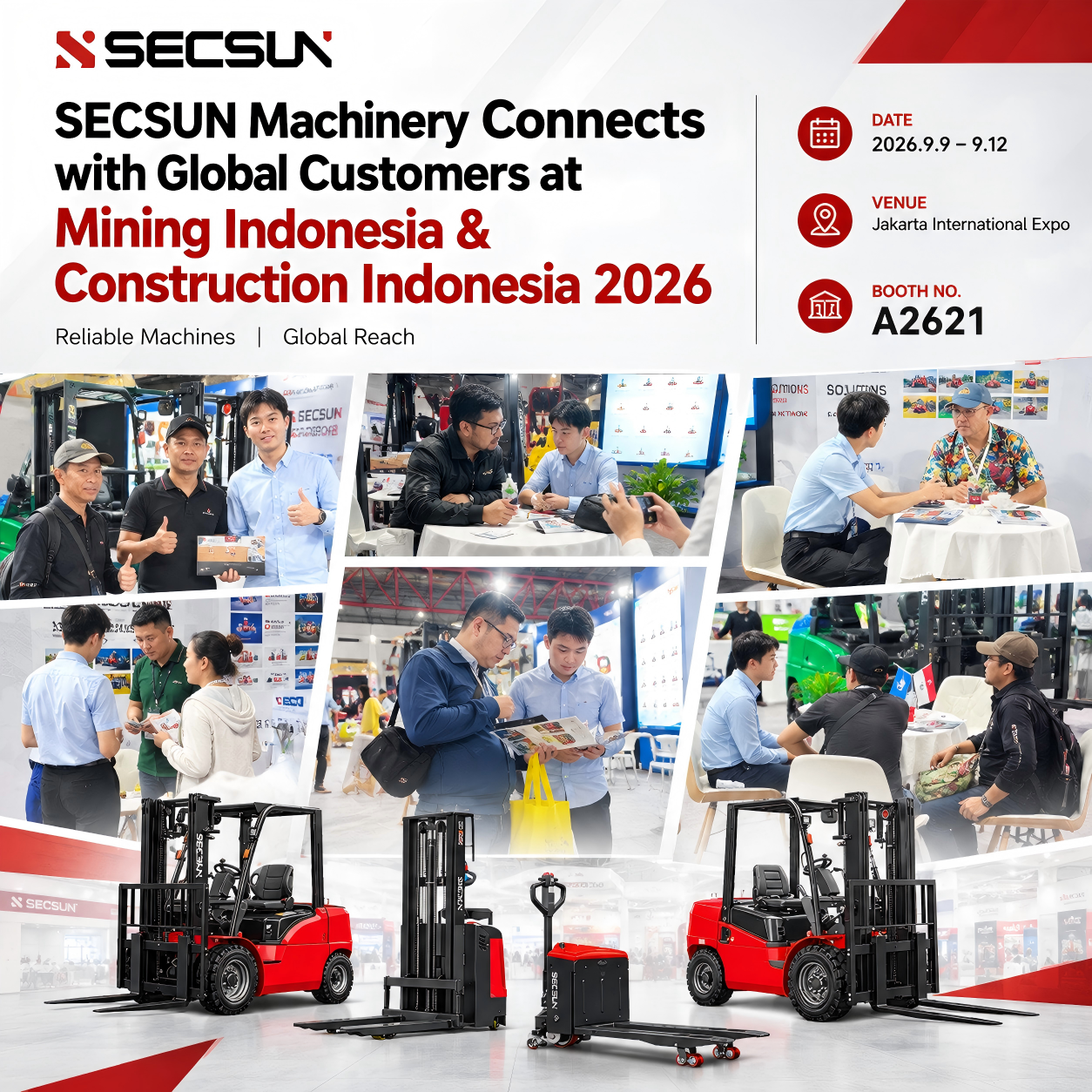 SECSUN Machinery Connects with Global Customers at Mining Indonesia & Construction Indonesia 2026
 SECSUN Machinery Featured at CIFIT 2026 in Xiamen, China