Choosing the right forklift capacity is an important part of selecting material handling equipment. A forklift that is too small for the required load may limit productivity and create unnecessary operating risks, while a forklift with much higher capacity than needed can increase the initial investment and operating costs.
For many warehouses, factories, logistics companies, and construction businesses, 1.5 ton, 3 ton, and 5 ton forklifts are common capacity options. Each capacity is designed for different load requirements, working environments, and applications.
So, how do you choose the right forklift capacity for your business?
The answer depends not only on the weight of the load, but also on factors such as:
Maximum and typical load weight
Load center distance
Required lifting height
Mast configuration
Attachment weight
Indoor or outdoor working environment
Operating frequency
Fuel and power requirements
Understanding these factors can help you select a forklift that provides the right combination of capacity, maneuverability, operating efficiency, and cost.
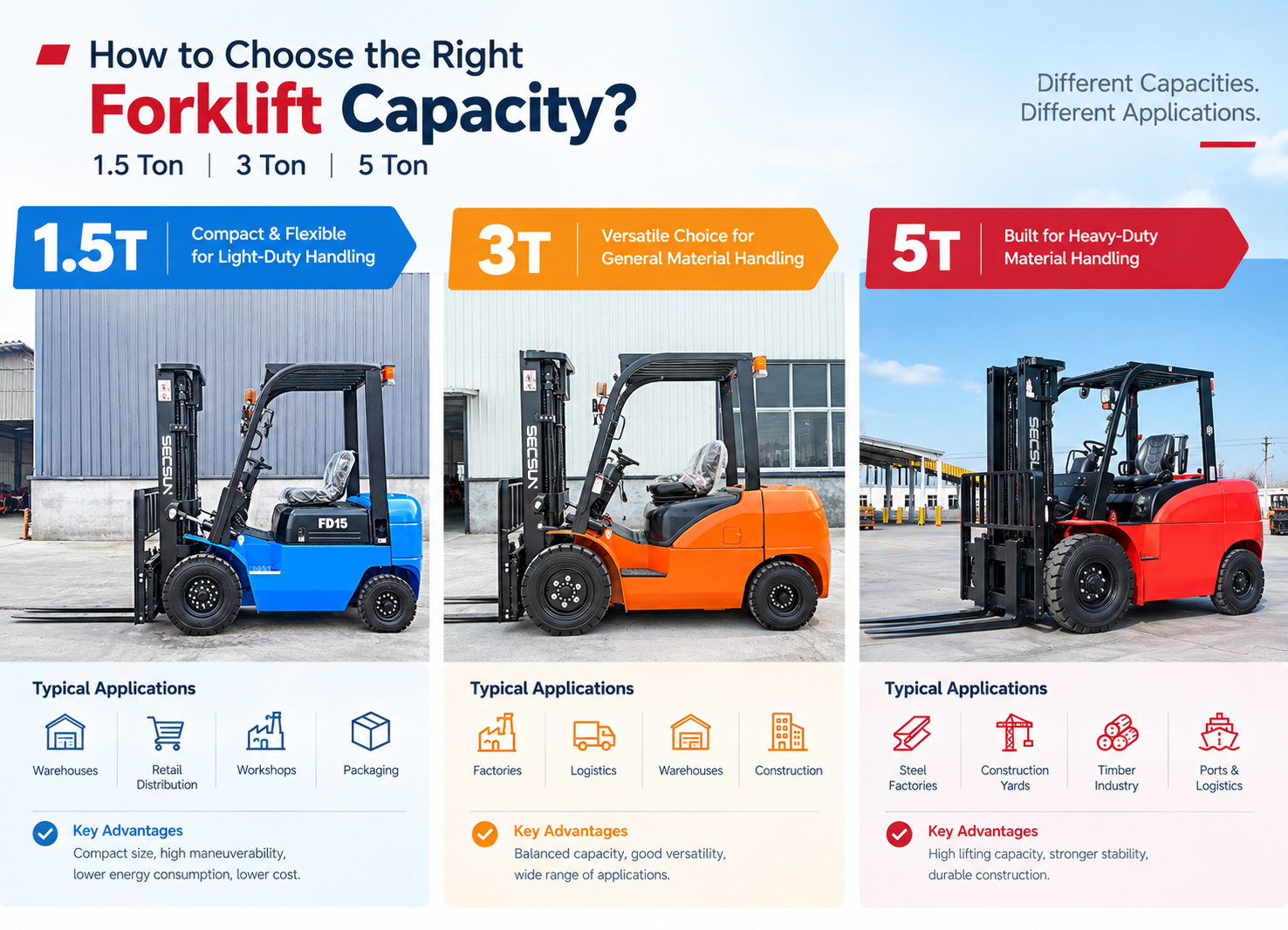
1.5 Ton Forklift: Compact and Flexible for Light-Duty Applications
A 1.5 ton forklift is designed for light-duty material handling and applications where maneuverability is important. Its relatively compact size makes it suitable for warehouses, workshops, retail facilities, and other locations where operating space may be limited.
Typical Applications
1.5 ton forklifts are commonly used for:
Small and medium-sized warehouses
Retail distribution centers
Manufacturing workshops
Packaging facilities
Light industrial operations
Indoor material handling
Advantages of 1.5 Ton Forklifts
The main advantage of a 1.5 ton forklift is its combination of compact dimensions and maneuverability.
Depending on the configuration, a smaller-capacity forklift can offer:
A smaller turning radius
Easier operation in narrow aisles
Lower energy or fuel consumption
Lower purchase and maintenance costs
Flexible handling of standard pallets and light industrial goods
For businesses that mainly handle relatively light loads, a 1.5 ton forklift can provide an efficient material handling solution without the additional size and capacity of a larger machine.
Electric and lithium-powered 1.5 ton forklifts are particularly suitable for indoor applications where low noise and zero direct exhaust emissions are important. Diesel or LPG models may be considered for applications that require outdoor operation or longer continuous working periods.
When Is a 1.5 Ton Forklift Suitable?
A 1.5 ton forklift may be suitable when:
Most loads are well within the 1.5 ton rated capacity
Working space or aisle width is limited
Frequent short-distance material handling is required
The operation mainly involves light pallets or packaged goods
Compact size and maneuverability are important
However, rated capacity should not be considered in isolation. If loads approach the forklift's rated capacity, especially at greater lifting heights or with attachments installed, the actual required capacity should be checked carefully.
3 Ton Forklift: A Versatile Choice for General Material Handling
A 3 ton forklift is widely used across manufacturing, warehousing, logistics, construction, and general industrial applications. It offers a balance between lifting capacity, maneuverability, and operating cost.
For companies handling a wide range of materials, a 3 ton forklift can provide greater flexibility than a smaller-capacity model while remaining more compact and economical than many heavy-duty forklifts.
Typical Applications
3 ton forklifts are commonly used for:
Manufacturing plants
Warehouses
Logistics and distribution centers
Construction material handling
Machinery handling
General industrial operations
What Can a 3 Ton Forklift Handle?
Depending on the machine configuration and load conditions, a 3 ton forklift can be used to handle:
Standard pallets
Machinery components
Building materials
Industrial products
Packaged goods
Manufacturing materials
The actual capacity of a forklift depends on more than its nominal rating. Load center, lifting height, mast configuration, and attachments can all affect the allowable load.
Diesel vs. Electric 3 Ton Forklifts
The power source is another important consideration when selecting a 3 ton forklift.
Diesel 3 ton forklifts are commonly considered for:
Outdoor operations
Construction sites
Heavy-duty material handling
Rougher working environments
Applications requiring extended operating periods
Electric or lithium 3 ton forklifts are commonly considered for:
Indoor warehouses
Manufacturing facilities
Logistics centers
Applications where low noise is preferred
Operations where zero direct exhaust emissions are required
The best choice depends on the working environment, operating schedule, charging or refueling conditions, and the type of material being handled.
When Is a 3 Ton Forklift Suitable?
A 3 ton forklift may be appropriate when:
Loads are generally within the 3 ton capacity range
The forklift needs to handle different types of materials
The machine will be used across warehouse and factory operations
A balance between capacity and maneuverability is required
The business expects a wide range of material handling tasks
For general-purpose applications, the 3 ton class can provide a practical balance of capacity and versatility.
5 Ton Forklift: Built for Heavy-Duty Material Handling
A 5 ton forklift is designed for applications where heavier loads are regularly handled. Its greater lifting capacity and heavy-duty construction make it suitable for industries such as steel, construction, timber, machinery manufacturing, and other demanding material handling operations.
Typical Applications
5 ton forklifts are commonly used in:
Steel factories and yards
Construction material yards
Timber and wood processing
Machinery manufacturing
Heavy industrial facilities
Ports and logistics terminals
Advantages of 5 Ton Forklifts
The main advantage of a 5 ton forklift is its ability to handle substantially heavier loads than smaller-capacity models.
Typical applications may include handling:
Heavy metal products
Large machinery components
Heavy pallets
Construction materials
Industrial equipment
Compared with smaller forklifts, 5 ton models generally have a larger and heavier-duty structure designed for demanding material handling applications.
When Is a 5 Ton Forklift Suitable?
A 5 ton forklift may be suitable when:
Heavy loads are regularly handled
Loads frequently exceed the practical range of smaller forklifts
Strong lifting performance is required
The machine will operate in demanding industrial environments
Durability and heavy-duty performance are important requirements
A 5 ton forklift typically requires a higher initial investment than a smaller model. However, using the appropriate capacity can help businesses avoid relying on undersized equipment for heavy-duty applications.
Forklift Capacity Is More Than Load Weight
One of the most important points when selecting a forklift is that rated capacity does not tell the entire story.
A forklift's actual lifting capability can be affected by several factors.
1. Load Weight
Start by identifying both the maximum load and the typical load handled during daily operations.
If your heaviest load is close to the forklift's rated capacity, it is important to check the manufacturer's capacity chart rather than simply selecting a forklift based on the nominal tonnage.
2. Load Center
Load center is another critical factor.
A forklift's rated capacity is normally based on a specified load center. If the load extends farther forward than the rated load center, the lifting capacity may be reduced.
This is particularly important when handling:
Long materials
Oversized pallets
Irregular loads
Loads with a high center of gravity
3. Lifting Height
Required lifting height can also affect the actual allowable capacity.
When selecting a forklift, consider:
Required lifting height
Mast type
Maximum lift height
Overhead clearance
Required capacity at the target lifting height
A forklift that can lift a certain load at a low height may have a different allowable capacity at maximum lift height.
4. Attachments
Attachments can change the way a forklift handles a load.
Common attachments include:
Side shifters
Fork positioners
Clamps
Rotators
Specialized forks
The weight and position of an attachment can affect the forklift's residual capacity. Therefore, the complete working configuration should be considered when selecting a forklift.
5. Working Environment
The operating environment also plays an important role.
For indoor warehouses, businesses may prioritize:
Compact dimensions
Easy maneuverability
Low noise
Zero direct exhaust emissions
Low operating costs
For outdoor and industrial applications, businesses may place greater importance on:
Engine power
Ground clearance
Tire selection
Durability
Outdoor operating capability
The forklift should be selected according to the actual working conditions rather than capacity alone.
1.5 Ton vs. 3 Ton vs. 5 Ton Forklift
The following comparison provides a simple starting point:
Forklift Capacity | Typical Application | Main Considerations |
1.5 Ton | Warehouses, workshops, light-duty handling | Compact size, maneuverability, light loads |
3 Ton | Factories, logistics, warehouses, general handling | Balance of capacity and versatility |
5 Ton | Steel, construction, machinery, heavy industry | Heavy loads, durability, lifting performance |
This table is only a general reference. The final forklift configuration should always be selected according to the actual load, load center, lifting height, attachment, and working environment.
How to Choose the Right Forklift Capacity
Before purchasing a forklift, it is useful to answer the following questions:
1. What is the heaviest load you need to handle?
Identify the maximum load rather than only the average load.
2. What is the load center distance?
Long or oversized loads may require a different capacity than standard pallets.
3. How high do you need to lift the load?
Check the required lifting height and the corresponding capacity at that height.
4. Will you use attachments?
Consider the weight and dimensions of any sideshifter, clamp, fork positioner, or other attachment.
5. Where will the forklift operate?
Determine whether the machine will mainly work indoors, outdoors, or in both environments.
6. How frequently will the forklift operate?
Daily intensive operations may require different power, cooling, tire, and configuration choices than occasional material handling.
7. What power source is suitable?
Depending on the application, you may choose between diesel, LPG, lead-acid electric, or lithium electric forklifts.
Conclusion: Choose Capacity Based on the Complete Application
Choosing between a 1.5 ton, 3 ton, and 5 ton forklift should not be based on load weight alone.
A 1.5 ton forklift can be suitable for light-duty handling where compact size and maneuverability are important.
A 3 ton forklift can provide a practical balance of lifting capacity and versatility for many general material handling applications.
A 5 ton forklift is designed for heavier loads and more demanding industrial applications.
Before making a purchase, businesses should evaluate load weight, load center, lifting height, attachments, working environment, operating frequency, and power source together.
SECSUN provides a range of forklift solutions, including 1.5 ton, 3 ton, and 5 ton forklifts, as well as diesel, LPG, electric, and lithium-powered models for different material handling requirements.
With the right forklift configuration, businesses can improve handling efficiency, support safer operations, and select equipment that matches their actual working conditions.
Contact SECSUN to discuss your load requirements and find a forklift configuration suitable for your application.
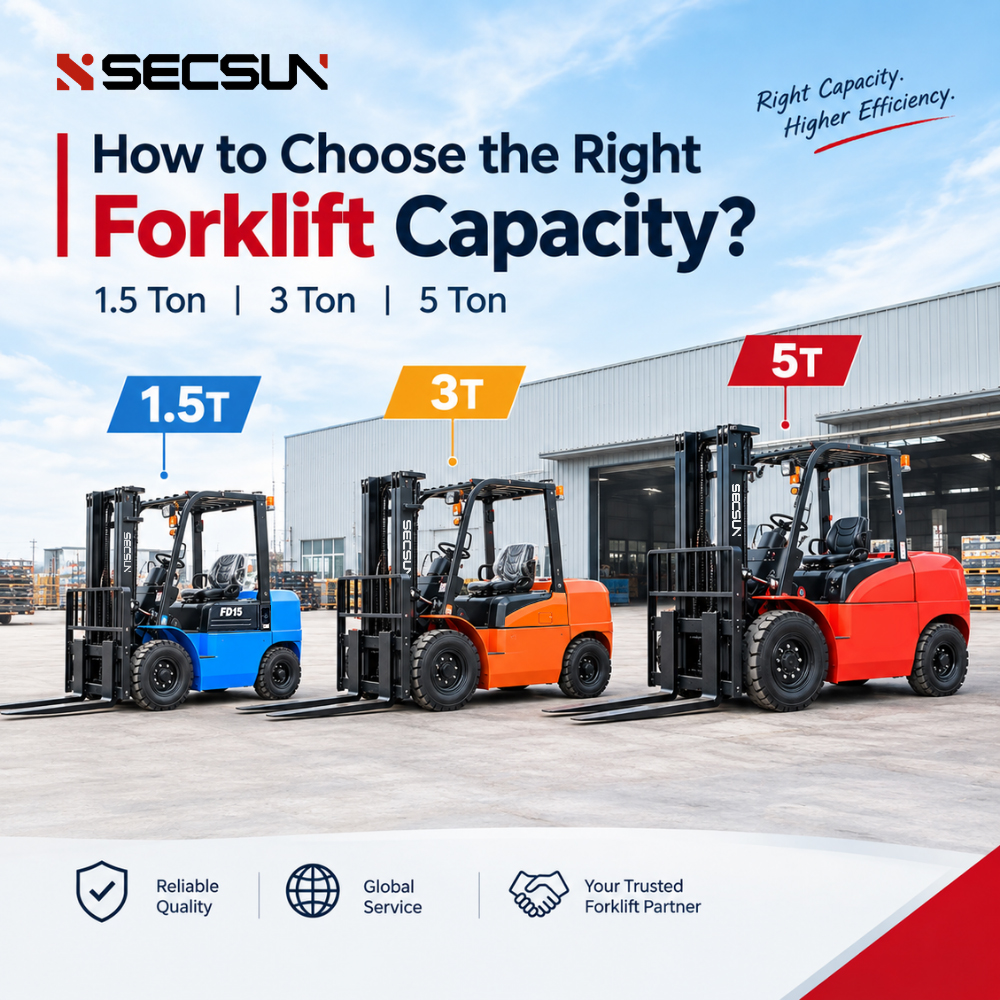 How to Choose the Right Forklift Capacity: 1.5 Ton, 3 Ton, or 5 Ton?
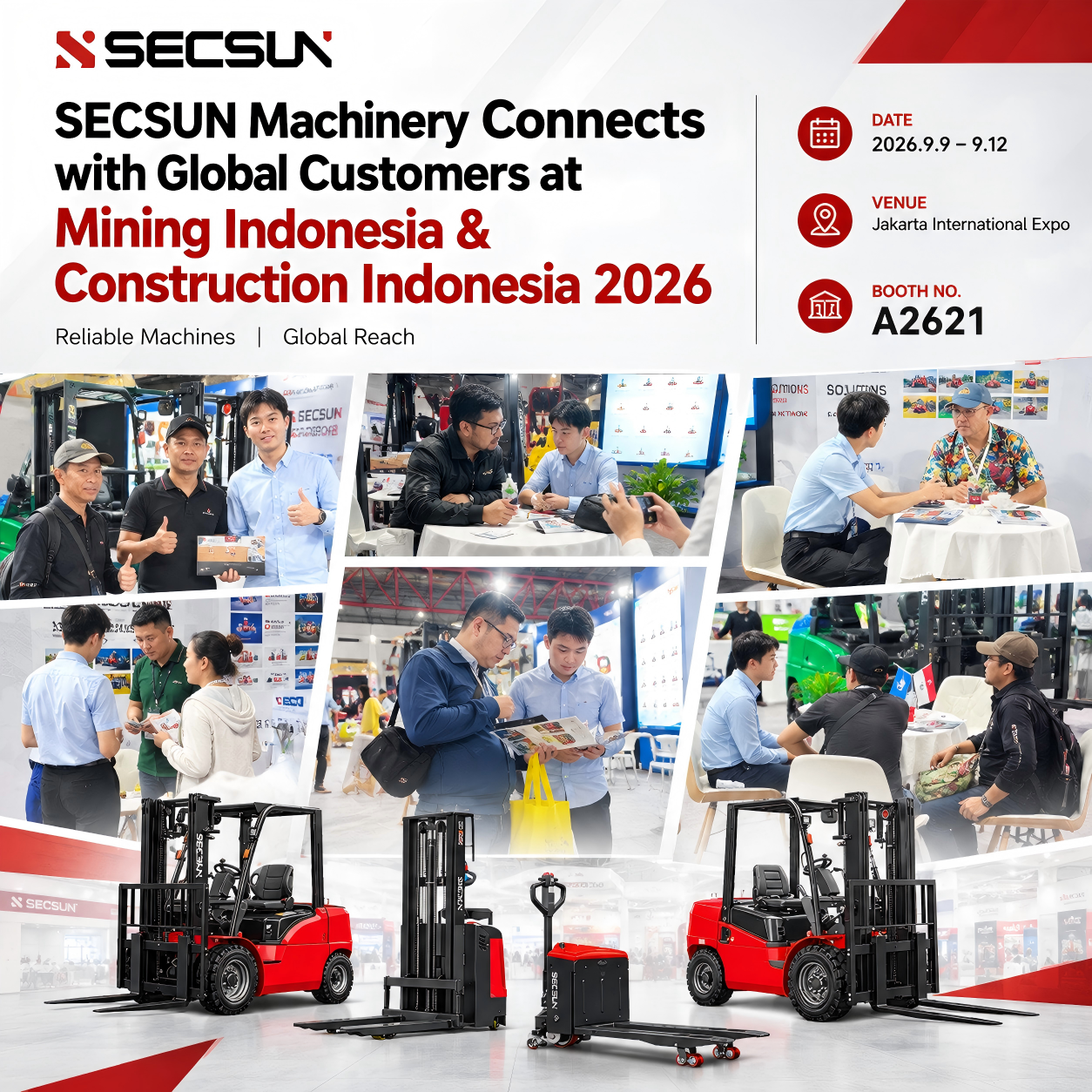 SECSUN Machinery Connects with Global Customers at Mining Indonesia & Construction Indonesia 2026
 SECSUN Machinery Featured at CIFIT 2026 in Xiamen, China
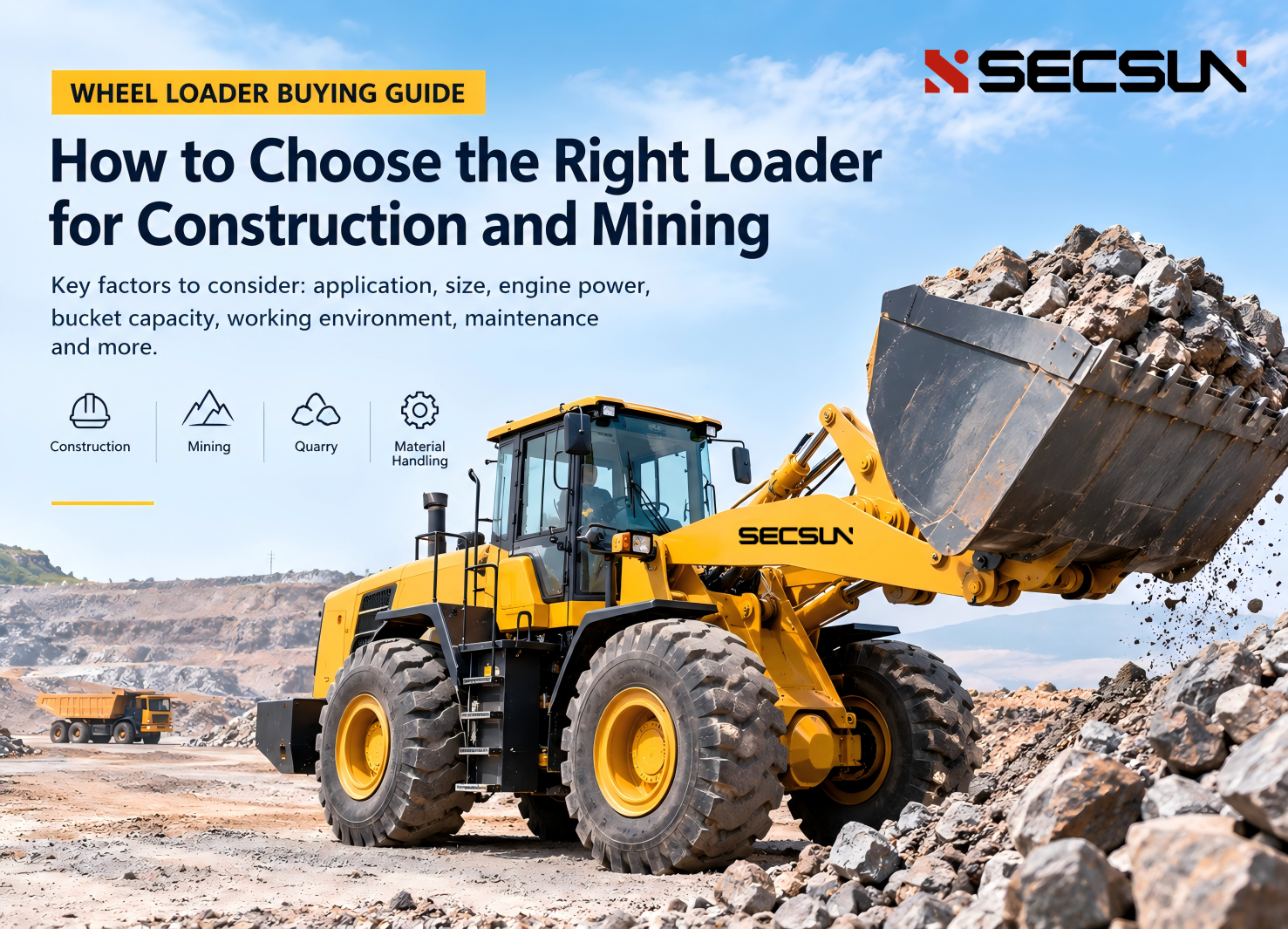 Wheel Loader Buying Guide: How to Select the Right Loader for Construction and Mining