As global trade, e-commerce, and industrial manufacturing continue to expand, efficient material handling has become more important than ever. Forklifts, as one of the most widely used types of industrial equipment, play a critical role in warehouses, factories, ports, construction sites, and distribution centers around the world.
According to recent industry data, the global forklift market continues to maintain steady growth, driven by increasing demand for warehouse automation, smart logistics solutions, and cleaner energy-powered equipment. From traditional diesel forklifts to advanced lithium battery electric forklifts, the industry is experiencing a major transformation toward higher efficiency, lower operating costs, and more sustainable solutions.
In 2026, companies are paying more attention not only to forklift purchase prices but also to long-term operating costs, productivity, energy consumption, and equipment reliability.
The global forklift industry has developed rapidly over the past decade. Forklifts are no longer considered simple lifting machines but have become an essential part of modern supply chain systems.
Industry research shows that the global forklift market is expected to continue expanding in the coming years, supported by several major factors:
Growth of global warehousing and logistics industries
Expansion of e-commerce fulfillment centers
Increasing investment in manufacturing automation
Rising demand for efficient warehouse operations
Replacement of traditional equipment with electric-powered solutions
Asia-Pacific remains one of the largest forklift markets worldwide due to strong manufacturing activity and infrastructure development. Countries such as China, India, and Southeast Asian markets are experiencing increasing demand for material handling equipment.
Meanwhile, Latin America, the Middle East, and Africa are also becoming important growth regions as companies upgrade logistics systems and improve industrial productivity.
One of the most significant changes in the forklift industry is the rapid adoption of electric forklifts.
Traditional diesel forklifts have been widely used for decades because of their strong power output and ability to handle heavy-duty operations. However, stricter environmental regulations and increasing fuel costs have encouraged businesses to explore cleaner alternatives.
Electric forklifts, especially lithium battery forklifts, are gaining popularity because of their advantages:
Compared with diesel forklifts, electric forklifts typically have lower energy costs. Electricity prices are generally more stable than fuel prices, allowing businesses to better control long-term operating expenses.
For example, in daily warehouse operations, a lithium forklift can significantly reduce energy costs compared with a diesel-powered machine operating under the same working conditions.
Electric forklifts have fewer moving parts compared with internal combustion engine forklifts. They do not require engine oil changes, fuel system maintenance, or complex engine repairs.
This helps companies reduce maintenance downtime and improve equipment availability.
With zero exhaust emissions during operation, electric forklifts are ideal for:
Indoor warehouses
Food and pharmaceutical industries
Electronics factories
Distribution centers
As sustainability becomes a priority for global companies, electric forklifts are expected to achieve even wider adoption.
Although electric forklifts are growing quickly, diesel forklifts remain essential for many demanding applications.
Diesel forklifts continue to be preferred in industries requiring:
High lifting capacity
Long working hours
Outdoor operation
Rough working environments
Heavy-duty diesel forklifts, such as 5-ton, 7-ton, and 10-ton models, are commonly used in:
Ports
Steel industries
Timber processing
Construction material handling
Large manufacturing facilities
Their powerful engines and excellent durability make them suitable for challenging environments where maximum performance is required.
Therefore, the future forklift market is not about replacing one technology with another, but about providing different solutions for different working conditions.
Lithium battery technology has become one of the fastest-growing areas in the forklift industry.
Compared with traditional lead-acid batteries, lithium batteries offer several advantages:
Faster charging speed
Longer service life
Higher energy efficiency
Maintenance-free operation
Opportunity charging capability
For businesses operating multiple shifts, lithium forklifts provide greater flexibility because operators can quickly recharge equipment during short breaks without replacing batteries.
This makes lithium forklifts especially suitable for modern logistics centers where continuous operation and high productivity are required.
The development of smart logistics is also changing forklift requirements.
Modern warehouses are increasingly adopting:
Automated guided vehicles (AGVs)
Automated storage and retrieval systems
Intelligent warehouse management software
High-density storage solutions
As warehouse space becomes more expensive, companies are investing in equipment capable of operating in narrow aisles and high-rack environments.
Products such as:
Reach trucks
VNA forklifts
Electric pallet trucks
Automated forklifts
are becoming increasingly important for improving storage efficiency.
The integration of forklifts with digital technologies will become a major direction for future material handling development.
With many different forklift types available, businesses should select equipment according to actual operating conditions.
Important factors include:
Common forklift capacities include:
1.5-ton forklifts for light warehouse operations
3-ton forklifts for general industrial applications
5-ton and above forklifts for heavy-duty handling
Indoor warehouses may benefit from electric forklifts, while outdoor yards may require diesel forklifts.
Companies with long working hours or multiple shifts should consider lithium battery solutions to maximize efficiency.
The purchase price is only one part of forklift investment. Businesses should also consider:
Energy costs
Maintenance expenses
Battery lifespan
Productivity improvement
Equipment reliability
A forklift with higher initial value may provide better long-term returns.
Looking ahead, the forklift industry will continue moving toward intelligence, electrification, and efficiency.
Major trends expected in the coming years include:
Wider adoption of lithium battery technology
Increased use of automation systems
Development of smart fleet management
Improved energy efficiency
More customized material handling solutions
Manufacturers that can provide reliable equipment, advanced technology, and professional service will have stronger competitiveness in the global market.
As logistics networks continue expanding worldwide, forklifts will remain a fundamental part of industrial development.
The global forklift industry is entering a new stage of development. Market data shows strong demand for efficient material handling solutions, while technological innovation is driving the transition from traditional equipment to smarter and greener machines.
Whether for warehouses, factories, ports, or construction sites, choosing the right forklift solution can help companies improve productivity and reduce operational costs.
As a professional material handling equipment supplier, SECSUN Machinery continues to provide reliable forklifts, warehouse equipment, and customized solutions for customers worldwide, helping businesses achieve more efficient and sustainable operations.
→ get more informations forklifts
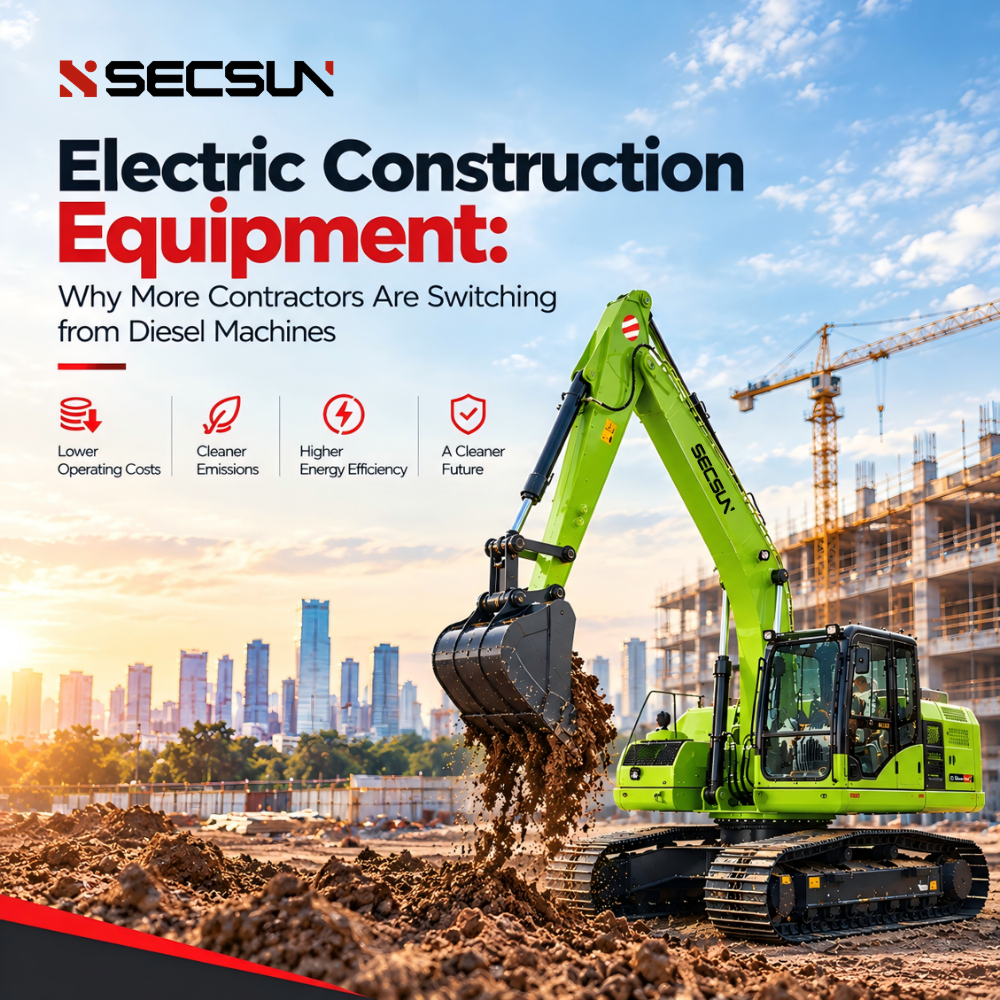 Electric Construction Equipment: Why More Contractors Are Switching from Diesel Machines
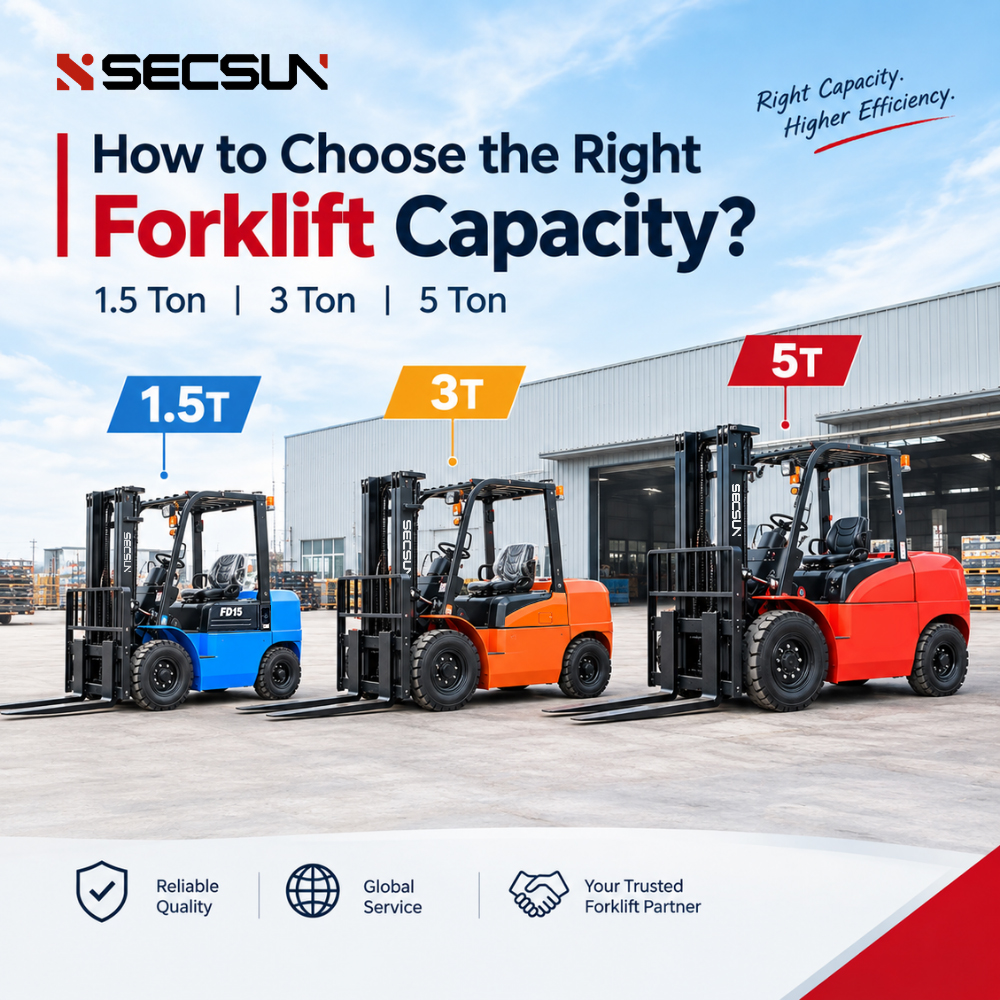 How to Choose the Right Forklift Capacity: 1.5 Ton, 3 Ton, or 5 Ton?
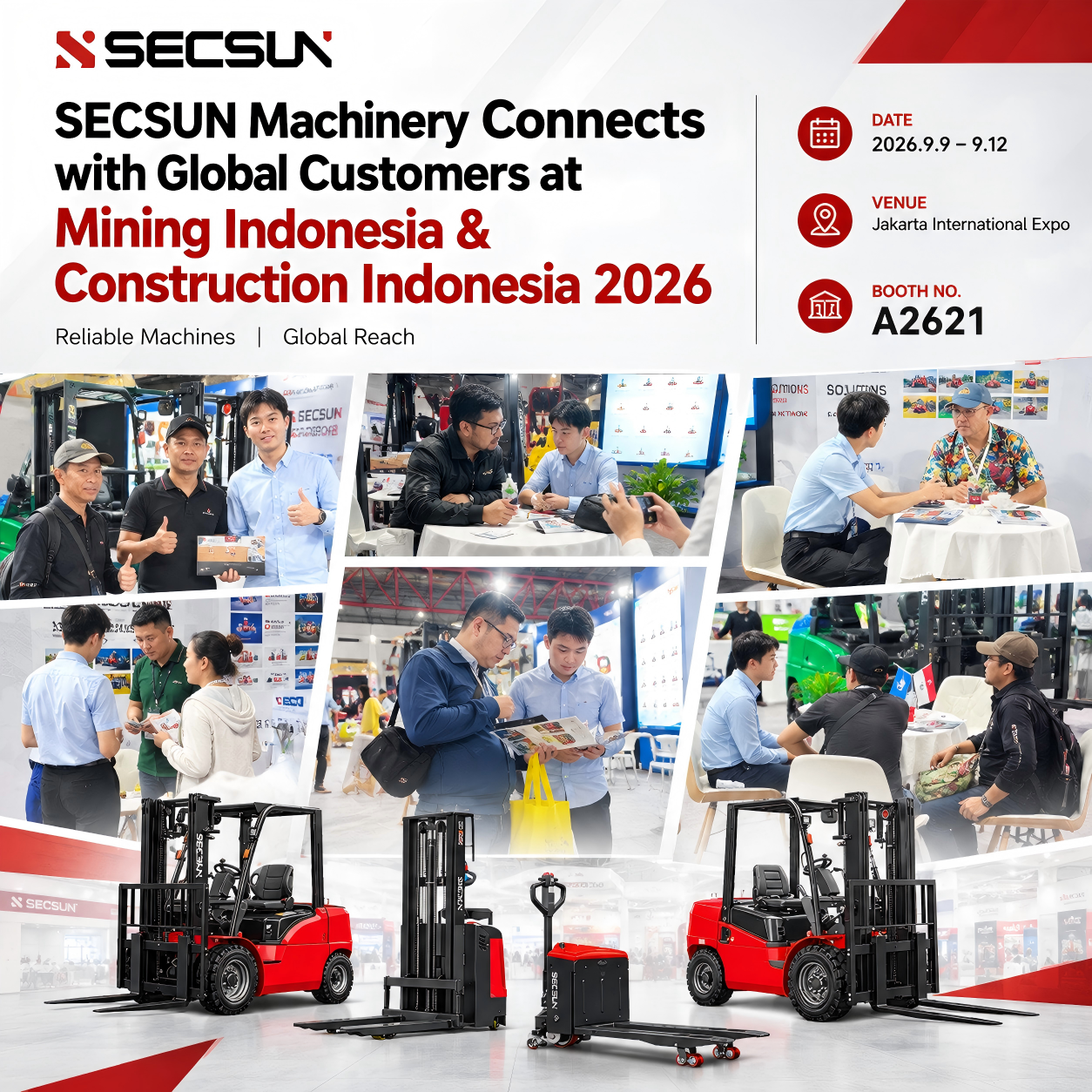 SECSUN Machinery Connects with Global Customers at Mining Indonesia & Construction Indonesia 2026
 SECSUN Machinery Featured at CIFIT 2026 in Xiamen, China