Both reach trucks and forklifts are designed to improve warehouse efficiency, but they are built for different working environments. The right choice depends on factors such as warehouse layout, aisle width, rack height, load capacity, and daily operation requirements.
For warehouse owners, logistics companies, and distributors, understanding the differences between reach trucks and forklifts can help reduce operating costs, improve storage efficiency, and select the most suitable equipment solution.
As a professional material handling equipment supplier, SECSUN Machinery provides customized warehouse solutions, including electric forklifts, reach trucks, pallet trucks, and other warehouse equipment for global customers.
A forklift is one of the most widely used material handling machines in industries such as manufacturing, logistics, construction, and warehousing.
Traditional forklifts are mainly designed for lifting, transporting, loading, and unloading goods over short and medium distances. They usually feature front-mounted forks and counterweights that provide stability when handling heavy loads.
Common forklift types include:
Diesel forklifts
LPG forklifts
Electric forklifts
Lithium battery forklifts
Forklifts are widely used in:
Manufacturing plants
Outdoor storage yards
Distribution centers
Construction sites
Ports and terminals
One of the biggest advantages of forklifts is their versatility. They can handle various loads and work in different environments with different attachments, such as:
Side shifters
Fork positioners
Paper roll clamps
Bale clamps
Rotators
For companies that need flexible material handling equipment for multiple applications, a forklift is often the preferred choice.
A reach truck is a specialized warehouse forklift designed for high-density storage environments.
Unlike traditional counterbalance forklifts, reach trucks are developed specifically for narrow aisles and high racks. The mast can extend forward to pick up or place pallets, allowing operators to access goods stored deep inside warehouse racks.
The main features of reach trucks include:
Compact body design
Small turning radius
High lifting height
Excellent visibility
Efficient operation in narrow aisles
Reach trucks are commonly used in:
High-rise warehouses
Distribution centers
Cold storage facilities
E-commerce warehouses
Automated storage systems
For modern warehouses where storage space is expensive, reach trucks help companies maximize vertical storage capacity.
Although both machines are used for material handling, there are several important differences between reach trucks and forklifts.
The biggest difference is the application environment.
Traditional forklifts are suitable for:
Indoor and outdoor operations
Loading and unloading trucks
Moving heavy materials
General warehouse operations
They perform well in open spaces where operators need flexibility.
Reach trucks are designed for:
Narrow warehouse aisles
High-density storage systems
Indoor operations
High-level pallet handling
If your warehouse has limited floor space and high storage racks, a reach truck may provide better efficiency.
Warehouse space utilization is becoming increasingly important. A major advantage of reach trucks is their ability to operate in narrower aisles.
A standard forklift usually requires wider aisles because of its counterweight structure and turning requirements.
A reach truck has:
Smaller turning radius
More compact dimensions
Better maneuverability
This allows warehouses to install more racks and increase storage capacity.
For example, in a high-density warehouse, replacing traditional forklifts with reach trucks can significantly increase available storage space.
Reach trucks are designed for vertical storage.
Many reach trucks can lift loads several meters high while maintaining excellent stability.
They are ideal for:
Multi-level pallet racks
High-bay warehouses
Distribution centers
Traditional forklifts also provide lifting capabilities, but their design focuses more on general transportation and heavy-duty handling rather than maximizing warehouse height.
Load capacity is another important consideration.
Forklifts generally offer a wider capacity range, including:
1.5 ton forklifts
3 ton forklifts
5 ton forklifts
Heavy-duty forklifts above 10 tons
They can handle heavier loads and more demanding outdoor applications.
Reach trucks are usually designed for warehouse applications with medium loads, commonly ranging from approximately 1 ton to 3 tons.
Before purchasing, buyers should evaluate:
Average pallet weight
Maximum load requirements
Lifting height
Working hours
Modern warehouses are increasingly choosing electric equipment because of lower operating costs and environmental benefits.
Electric forklifts and electric reach trucks provide advantages such as:
Zero emissions
Lower maintenance costs
Lower noise levels
Better indoor working conditions
Compared with diesel forklifts, electric warehouse equipment can significantly reduce daily operating expenses, especially in facilities operating multiple shifts.
For cold storage, food processing, pharmaceutical warehouses, and logistics centers, electric reach trucks and electric forklifts are becoming increasingly popular choices.
The answer depends on your specific operation.
Choose a forklift if you need:
✅ Indoor and outdoor capability
✅ Higher load capacity options
✅ Truck loading and unloading
✅ Multiple application flexibility
✅ Heavy-duty material handling
Choose a reach truck if you need:
✅ Narrow aisle operation
✅ High storage racks
✅ Maximum warehouse space utilization
✅ Indoor logistics efficiency
✅ High-frequency pallet movement
Before making a purchase decision, warehouse owners should consider the following questions:
Measure:
Aisle width
Rack height
Storage density
Floor conditions
Consider:
Average pallet weight
Maximum load
Load dimensions
For intensive operations, battery performance and maintenance costs are important factors.
Different industries may require different attachments and configurations.
A professional equipment supplier can help analyze your operation and recommend the most suitable solution.
SECSUN Machinery provides reliable material handling equipment solutions for customers worldwide.
Our product range includes:
Electric forklifts
Diesel forklifts
Lithium battery forklifts
Reach trucks
Electric pallet trucks
Warehouse equipment solutions
With experience serving customers in more than 180 countries and regions, SECSUN focuses on providing efficient, reliable, and customized machinery solutions for logistics, manufacturing, and industrial applications.
Whether you need a reach truck for a high-density warehouse or a forklift for general material handling, our professional team can help you select the right equipment.
Contact SECSUN Machinery today to get a customized warehouse equipment solution and factory quotation.
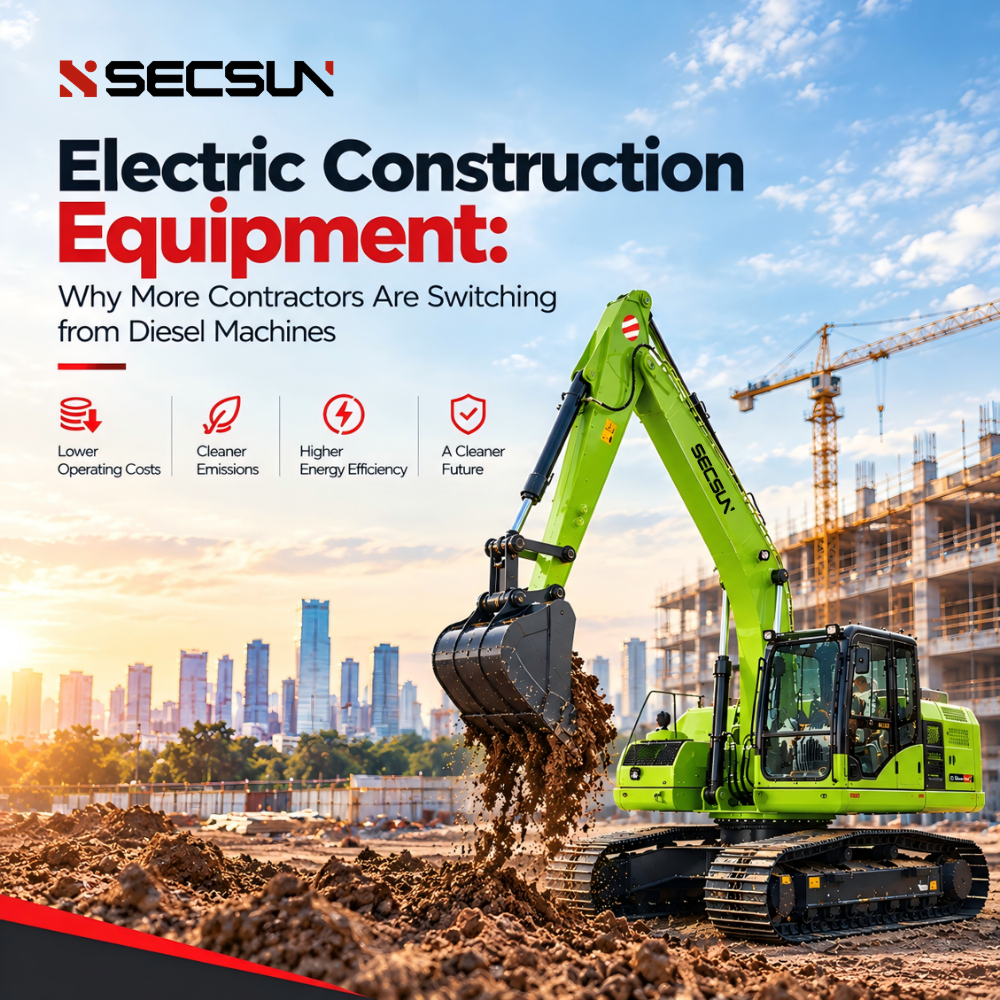 Electric Construction Equipment: Why More Contractors Are Switching from Diesel Machines
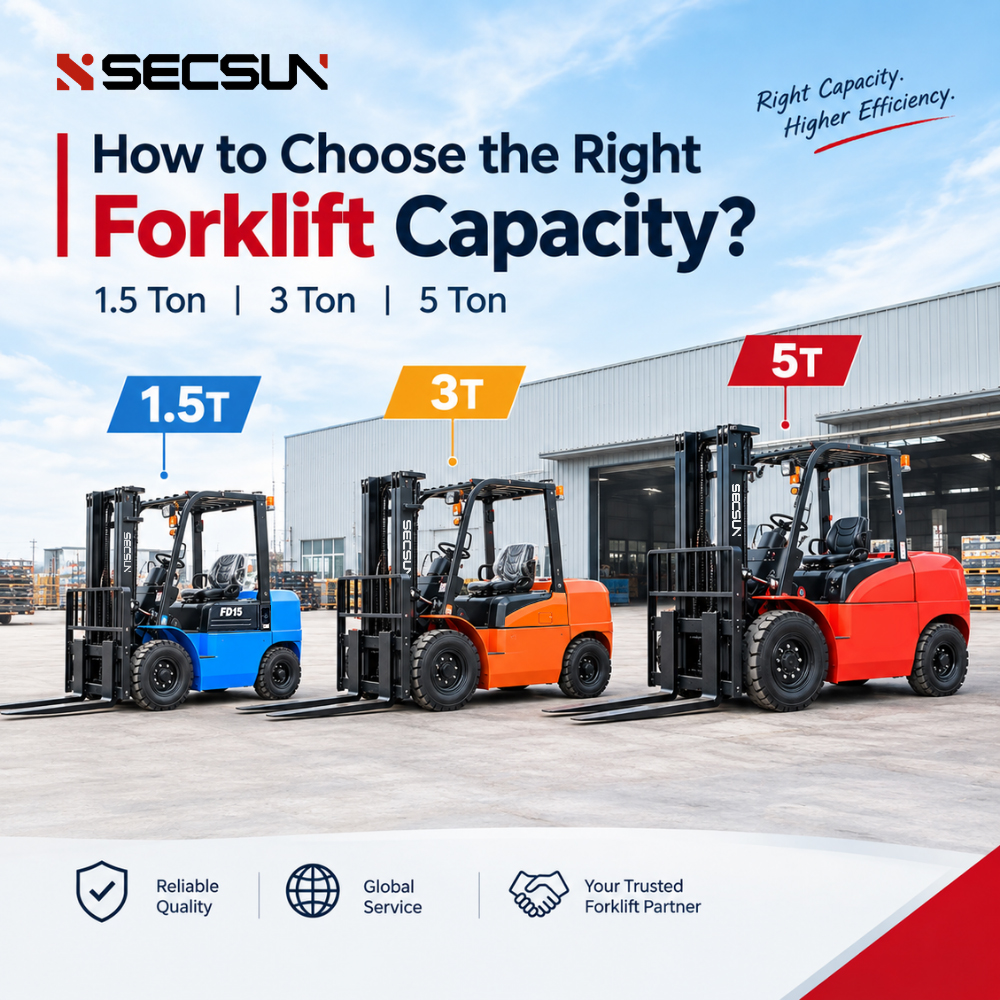 How to Choose the Right Forklift Capacity: 1.5 Ton, 3 Ton, or 5 Ton?
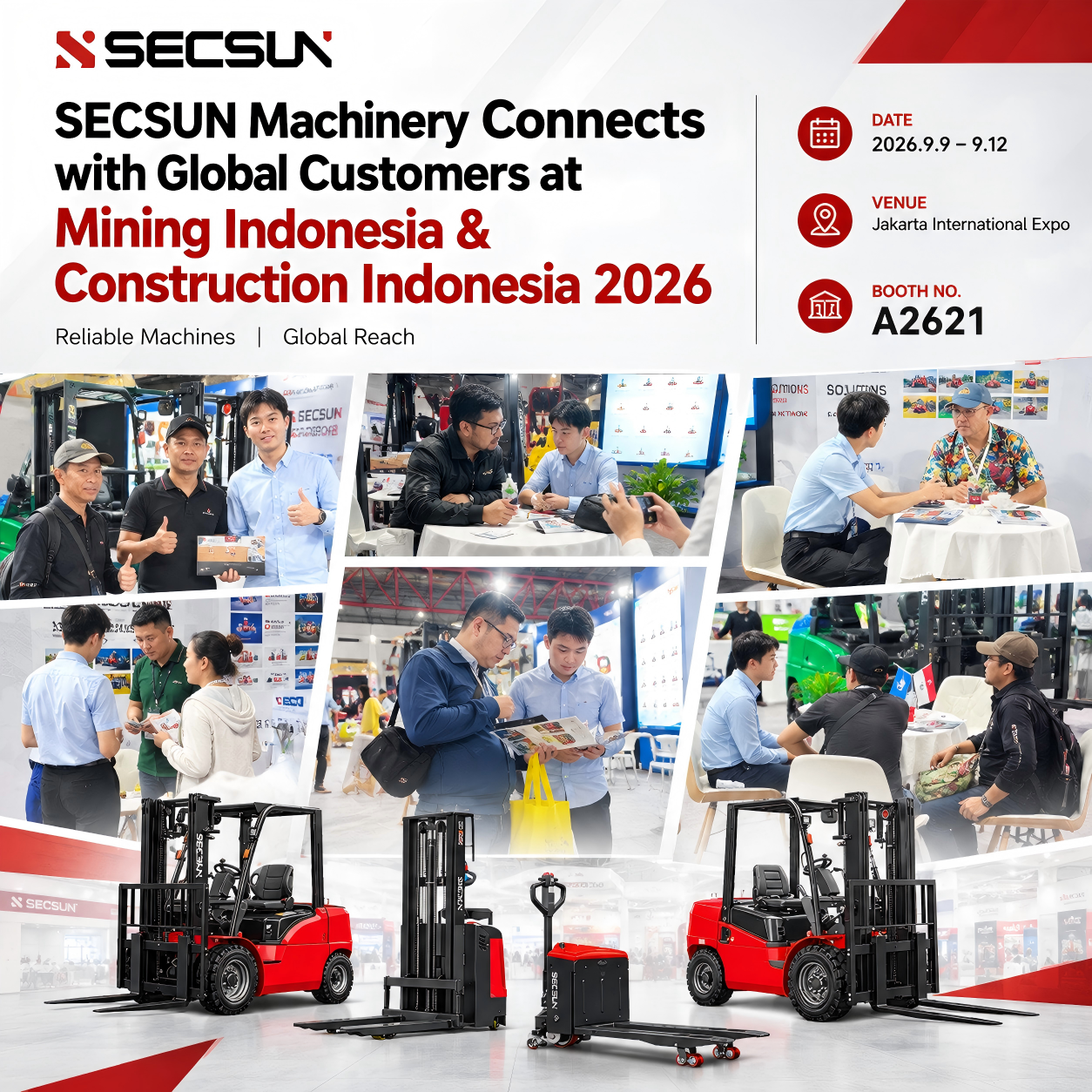 SECSUN Machinery Connects with Global Customers at Mining Indonesia & Construction Indonesia 2026
 SECSUN Machinery Featured at CIFIT 2026 in Xiamen, China