Introduction
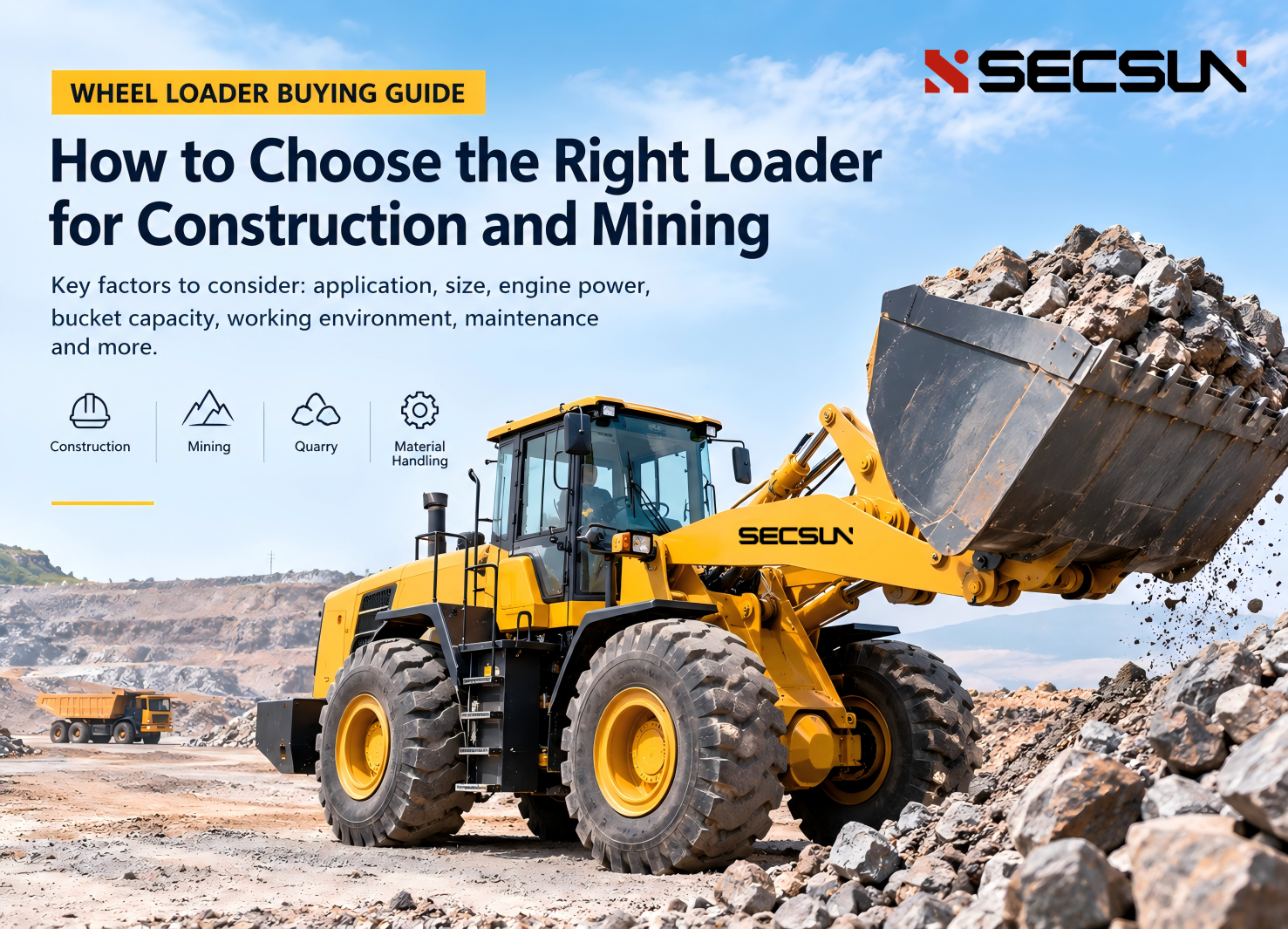
Choosing the right wheel loader is an important decision for construction companies, mining contractors, and material handling businesses. A wheel loader is a versatile piece of heavy equipment widely used for loading, transporting, and handling various materials, including soil, sand, gravel, rocks, and construction waste.
However, selecting the right wheel loader is not only about choosing a machine with more power or larger capacity. The ideal loader should match your working conditions, material types, operating environment, and project requirements.
Different applications require different machine configurations. A compact wheel loader may be suitable for small construction projects, while a heavy-duty wheel loader is often necessary for mining and large-scale earthmoving operations.
This wheel loader buying guide explains the key factors to consider when selecting the right loader for construction and mining applications.

1. Understand Your Application Requirements
Before purchasing a wheel loader, the first step is to clearly understand how the machine will be used.
Common wheel loader applications include:
Construction projects
Mining operations
Quarry operations
Road construction
Agriculture
Waste management
Material handling
Different industries require different performance characteristics.
For example:
Construction sites usually require loaders for:
Moving soil and sand
Loading trucks
Handling construction materials
Site preparation
Mining operations often require machines with:
Higher loading capacity
Stronger structural components
Better durability
Longer working hours
Understanding your actual application helps avoid choosing a machine that is either underpowered or unnecessarily expensive.
2. Choose the Right Wheel Loader Size and Capacity
Wheel loaders are available in different sizes and loading capacities. Selecting the correct size is one of the most important decisions.
Compact Wheel Loaders
Compact wheel loaders are suitable for:
Small construction projects
Landscaping
Agricultural applications
Urban projects
Their advantages include:
Flexible operation
Easy transportation
Lower fuel consumption
Operation in limited spaces
They are ideal for businesses that need a versatile machine for light and medium-duty tasks.
Medium Wheel Loaders
Medium wheel loaders are among the most commonly used models in construction.
They are suitable for:
Building projects
Road construction
Material yards
General earthmoving
These loaders provide a good balance between:
Operating efficiency
Fuel economy
Loading capacity
Maintenance cost
For many contractors, a medium wheel loader offers the best combination of performance and investment value.
Large Wheel Loaders
Large wheel loaders are designed for demanding applications such as:
Mining
Large quarries
Heavy material handling
Large-scale infrastructure projects
They provide:
Higher bucket capacity
Stronger lifting force
Greater durability
Higher productivity
For operations requiring continuous heavy loading, a large wheel loader can significantly improve efficiency.
3. Consider Engine Power and Performance
Engine power directly affects wheel loader performance, especially in demanding working environments.
A powerful engine helps improve:
Loading efficiency
Climbing ability
Working speed
Productivity
However, higher horsepower does not always mean better performance.
The engine should match the machine size and application requirements.
For example:
Small construction projects may not require high horsepower
Mining applications often require stronger engines for continuous operation
When selecting a wheel loader, consider:
Engine brand
Power output
Fuel efficiency
Emission standards
Local service availability
Reliable engine performance helps reduce downtime and improve long-term operating efficiency.
4. Evaluate Bucket Capacity and Material Type
The bucket is one of the most important components of a wheel loader because it directly affects loading efficiency.
Different materials require different bucket configurations.
Common materials include:
Sand
Gravel
Soil
Coal
Rocks
Construction waste
A larger bucket is not always better.
For lightweight materials, a larger bucket can improve productivity.
For heavy materials such as rocks or mining materials, the loader requires:
Stronger bucket structure
Higher breakout force
Better stability
Choosing the right bucket capacity helps maximize productivity while avoiding unnecessary equipment stress.
5. Consider Working Environment and Operating Conditions
The working environment plays a major role in selecting the right wheel loader.
Construction Sites
Construction applications usually require:
Good maneuverability
Reliable hydraulic performance
Flexible attachments
Efficient loading cycles
Mining and Quarry Applications
Mining environments require equipment with:
Heavy-duty design
Reinforced components
High durability
Long operating capability
Harsh Weather Conditions
For areas with extreme temperatures or difficult terrain, buyers should consider:
Cooling systems
Hydraulic system performance
Tire selection
Operator cabin conditions
Choosing a machine designed for the specific environment can improve reliability and reduce maintenance costs.
6. Check Maintenance Requirements and Spare Parts Support
Heavy equipment is a long-term investment, and maintenance support is essential.
Before purchasing a wheel loader, buyers should consider:
Availability of spare parts
Maintenance procedures
Technical support
Warranty policy
A reliable manufacturer should provide:
Operation manuals
Maintenance guidance
Spare parts supply
Remote technical assistance
Easy access to parts and service support helps reduce downtime and keeps projects running efficiently.
7. New Wheel Loader vs Used Wheel Loader: Which One Is Better?
Many buyers compare new and used wheel loaders when making a purchasing decision.
Used equipment may have a lower initial cost, but buyers should carefully evaluate:
Machine working hours
Maintenance history
Component condition
Remaining service life
A new wheel loader usually provides:
Latest technology
Lower maintenance risk
Manufacturer warranty
Longer service life
For businesses requiring reliable daily operation, a new machine can provide better long-term value.
8. Why Choose a Reliable Wheel Loader Manufacturer?
Selecting the right manufacturer is just as important as selecting the right machine.
A professional wheel loader manufacturer should provide:
Stable product quality
Complete technical support
Export experience
Customized solutions
Reliable after-sales service
For international buyers, working with an experienced manufacturer can simplify:
Equipment selection
Shipping arrangements
Spare parts supply
Long-term cooperation
A reliable supplier helps customers choose equipment that matches their actual working requirements.
Conclusion
Choosing the right wheel loader requires careful consideration of application, capacity, engine performance, bucket size, working environment, and after-sales support.
For small construction projects, a compact or medium wheel loader may provide the best flexibility and efficiency.
For large construction projects, mining, and quarry operations, heavy-duty wheel loaders with stronger performance and durability are often the better choice.
Before purchasing, businesses should evaluate their current needs and future growth plans to select the most suitable equipment.
SECSUN provides reliable wheel loaders for construction, mining, and material handling applications, offering different configurations to meet various working conditions worldwide.
Contact SECSUN to find the right wheel loader solution for your project.
 Wheel Loader Buying Guide: How to Select the Right Loader for Construction and Mining
 Diesel vs Electric Forklift: Which One Is Better for Your Warehouse in 2026?
 Diesel Crawler Excavator vs Lithium Battery Crawler Excavator: A Complete Operating Cost Analysis
 How to Choose a Reliable Forklift Supplier in China: A Complete Buyer’s Guide 2026